PrintingComparison
Flexographic vs Offset Printing for Packaging
Compare flexo and offset for the same packaging job: ink transfer, substrate, artwork, finishing, setup, waste and the cost of accepted finished packs.
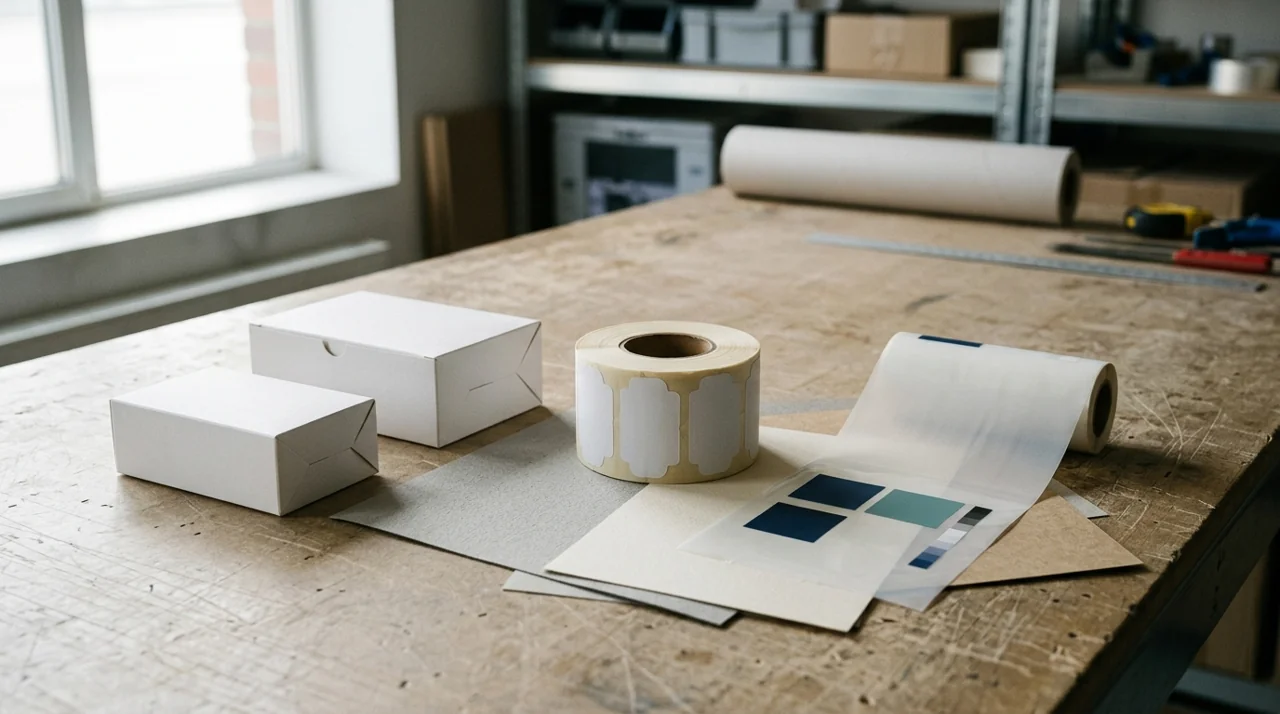
Leaving converting out of a print comparison can hide the cost of the finished pack. In a flexographic vs offset printing comparison, start with the material and delivery form: flexo is a practical first candidate for flexible film or foil, while a paperboard job deserves a comparison of the actual flexo and offset production routes. Decide between them using the same artwork, acceptance requirements and finished quantity.
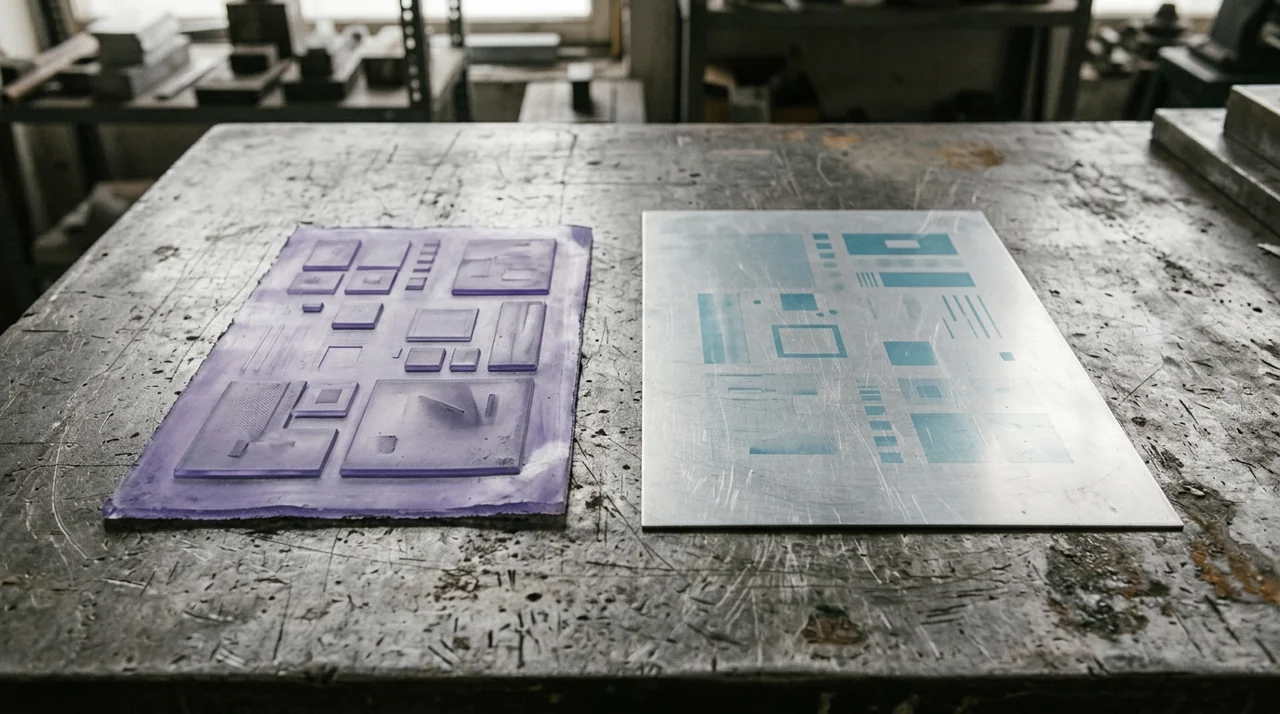
Flexo transfers ink directly from a flexible relief plate to the material. Offset transfers the image from a plate through a rubber blanket. That distinction explains the names; it does not establish a universal winner for cost or quality. The tables below turn the comparison into a job specification and a record of what each production route includes.
How the ink reaches the packaging
The transfer paths below describe image transfer, rather than every component of a press.
| Process | Ink transfer path | What to identify on the job record |
|---|---|---|
| Flexographic printing, or flexo | Ink supply → anilox roller → raised image on a flexible plate → substrate | Plate, anilox, ink system and material |
| Offset lithography, often called offset or litho | Ink → image on a flat plate → rubber blanket → substrate | Plate, blanket, ink system and material |
IGT’s flexo method describes the anilox metering ink to the relief plate, which prints directly onto the substrate. Its laboratory system allows changes to printing force, anilox force and speed. These are separate conditions to record, not a single property called “flexo quality.”
HEIDELBERG’s prospectus describes the offset image moving from a flat plate to a blanket and then to the printing material. Its sheetfed explanation follows a stack of sheets through the printing units and into subsequent finishing. Here, “litho” means offset lithography; it does not identify a particular carton construction or finishing method.
Start with substrate and delivery form
IGT identifies paper, plastic film and foil among the flexible substrates used with its flexo test system. That supports considering flexo for those materials; it does not establish that every production press can run every grade. Kemtek’s comparison also describes packaging substrates and inline processing as reasons to consider flexo, while discussing offset for smooth printing surfaces.
Use those descriptions to make a shortlist. Then ask each printer to identify the actual material and route it proposes.
| Your job | Sensible comparison to request | Condition that remains open |
|---|---|---|
| Flexible film or foil supplied in reels | Start by checking a flexo route matched to that stock | Film or foil grade, printable side, ink compatibility and required downstream operations |
| Paperboard carton | Compare the complete proposed flexo and offset routes | Board grade, surface, finished structure and approved appearance after converting |
| Paper label | Compare routes that deliver the same usable label format | Face stock, adhesive construction if any, cut format and final roll or sheet requirements |
| Corrugated pack with an offset proposal | Ask whether the image is printed on a separate facing sheet and then mounted | Whether both proposals include the same board construction and mounting operations |
The last row is a question to resolve on the specification, not a claim that two differently constructed boxes are equivalent. Likewise, do not accept a reel price as comparable with a price for cut, folded and glued cartons.
For labels, settle the paper or film face stock before using the print-method comparison. The face, adhesive and protective finish are separate choices.
Compare the artwork against an agreed sample
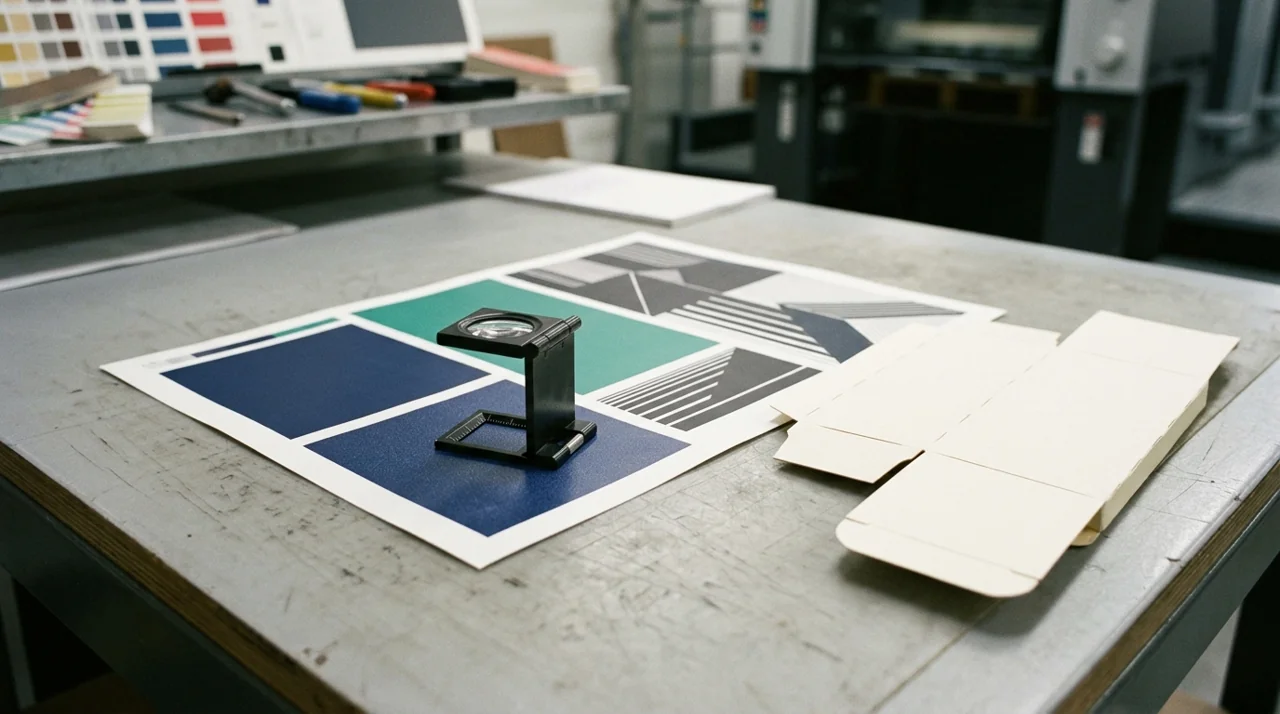
Do not award “best quality” to a process name. Mark the artwork features that matter on this pack: small positive text, reversed text, gradients, solid areas, spot colours and the alignment of adjacent colours. Ask both printers to explain how those features will be reproduced on the specified material.
Our recommended approval record separates three decisions:
- Content: approve the correct artwork revision, dimensions, copy and dieline.
- Appearance: agree the reference sample, viewing conditions and any measured colour or registration limits with the printer.
- Finished use: inspect the agreed printed construction after the specified coating, cutting, creasing, folding or other converting steps.
IGT’s method calls for dried samples to be assessed with their test conditions recorded. A useful extension for procurement is to keep the substrate, ink and finish attached to each approval record. An attractive sample on a different stock leaves the proposed job unverified.
Include finishing in both production routes
Kemtek describes flexo configurations that combine printing with processing in one pass. HEIDELBERG’s finishing overview separately lists cutting, die-cutting, folding, inspection, carton gluing and hot foil stamping. Neither description tells you which operations a particular proposal includes.
Ask for an operation list from incoming stock to delivered pack. Mark each operation as inline, offline or excluded. Include any mounting, lamination, slitting, waste stripping and packing required by your specification. “Inline capable” is not confirmation that the quoted configuration performs that operation.
For example, if one proposal ends at printed reels and another includes converted labels, first add the missing conversion scope. If the two proposals use different protective finishes, resolve the finish before comparing their totals. The commercial printing section places these print choices within the wider prepress, ink and finishing workflow.
Why there is no universal run-length cutoff
Both routes require job-specific preparation, and the work included in that preparation matters. A repeat order with usable existing plates is a different comparison from a first order with new artwork. Several artwork versions also need their own setup assumptions recorded, even when their combined quantity looks large.
We recommend separating the cost discussion into these lines:
| Cost line | What to establish for each route |
|---|---|
| Prepress and plates | New or reused plates, artwork preparation, proofing, ownership and any replacement charge |
| Makeready | Mounting or loading, colour and registration approval, cleaning and changeovers included |
| Material and waste | Stock supplied, allowed setup and production waste, and whether that allowance is already in the price |
| Printing | Colours, sides, versions and quantity covered |
| Converting and delivery | Every required finishing operation, packing, freight and delivery point |
Compare the total for the agreed scope against the accepted finished quantity. Do not divide by sheets fed or reel length when the required output is finished packs. If waste is already included in the total, avoid adding the same allowance again.
Ask for a first-order total and a repeat-order total on the same assumptions. Leave the crossover quantity unknown until comparable job prices establish it. This page supplies no generic price, press speed or break-even quantity.
A comparison sheet for the same packaging job
Copy this sheet into your job record. Fill the shared specification first, then enter each printer’s answer. Blank cells mean unverified, not “included” or zero.
| Shared specification | Your requirement |
|---|---|
| Pack or label dimensions and finished construction | |
| Exact substrate grade, thickness and printable side | |
| Artwork revision, colours, sides and number of versions | |
| Accepted finished quantity for each version | |
| Appearance reference and agreed approval criteria | |
| Required coating, lamination and converting operations | |
| Delivery format, destination and required date |
| Route-specific answer | Flexo proposal | Offset proposal |
|---|---|---|
| Press configuration and supported stock confirmed | ||
| New plates, reused plates and prepress scope | ||
| Makeready and approval scope | ||
| Waste allowance and where it is charged | ||
| Inline operations included | ||
| Offline operations included | ||
| Excluded work or subcontracted operations | ||
| Proof or sample supplied, with material and finish | ||
| First-order total for the shared specification | ||
| Repeat-order total and plate-reuse conditions | ||
| Accepted finished quantity and delivery commitment |
Resolve a changed material, missing finishing step or different quantity before treating the totals as comparable. If only one route has demonstrated the required result on the specified construction, the other remains a candidate to verify.
Method and sources
This comparison was assembled from the public documents listed below, checked on 15 October 2026, and Kemtek’s comparison saved on 11 October 2026. IGT supports the flexo transfer path and sample-recording principle. HEIDELBERG’s 2013 prospectus is used for the established offset transfer mechanism, not current equipment performance or economics; its current finishing page identifies postpress categories. Kemtek provides supplier context for the process comparison.
The shortlist, approval record and comparison sheet are editorial recommendations. They are not press trials, price observations or endorsements of a printer. Food-contact suitability, recycling performance and machine selection require separate evidence. For the site’s source and correction approach, see the editorial policy.
Sources
- W76 — Flexo Printing, version 2022-09 (IGT Testing Systems)
- Listing prospectus: Brief Description of the Sheetfed Offset Printing Process (Heidelberger Druckmaschinen AG)
- Finishing and converting (HEIDELBERG)
- How does flexo printing stack up against offset printing? (Kemtek)