EnvelopesComparison
Flexo versus offset litho on custom envelopes
Pick the anilox band before the press type. A solids roll floods process dots, and offset leftover ink is already contaminated by dampening.
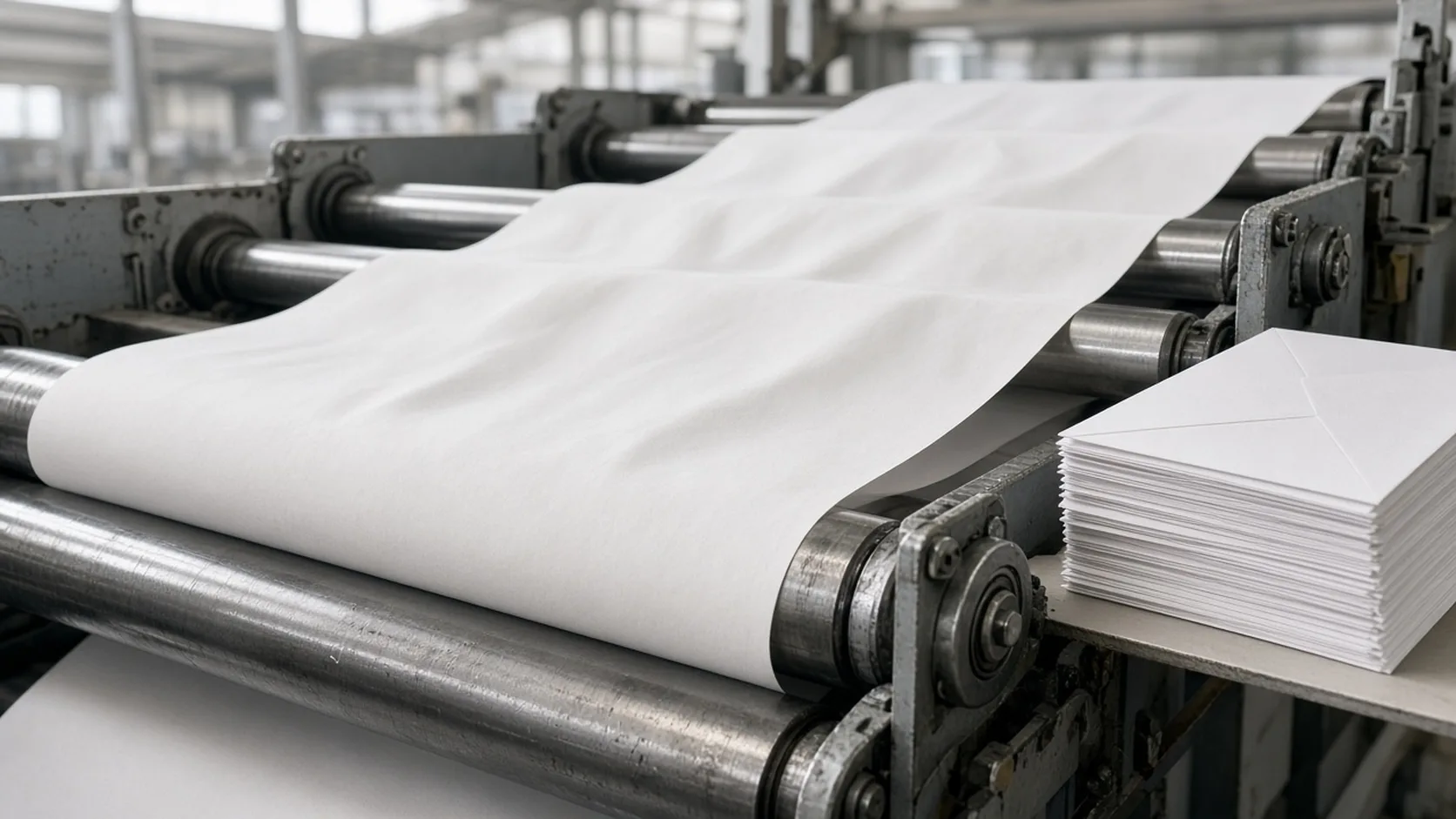
A solids anilox on a process plate floods the dots, and an offset unit held for a one-color return address wastes ink that dampening has already contaminated. The press name does not decide either loss. The metering device does.
| Choice | What meters the ink | Envelope route | Dominant failure mode |
|---|---|---|---|
| Flexo | Engraved anilox, volume in BCM, onto a relief plate | Inline on a web-fed converting machine | Volume above the process band grows the dots |
| Offset litho | Dampening, then ink, on a flat plate, then a blanket | Printed on the roll or the blanks before converting | Film-split and dampening drift; leftover ink is scrap |
| One anilox for both solids and process | None that stays inside both published bands | Either route | The lightest solids volume is already above the process ceiling |
Takeaway: Read the anilox band for the graphic before you argue flexo versus offset. A process job whose roll is above 2.8 BCM is already outside the published process band.
Two paths, two film splits
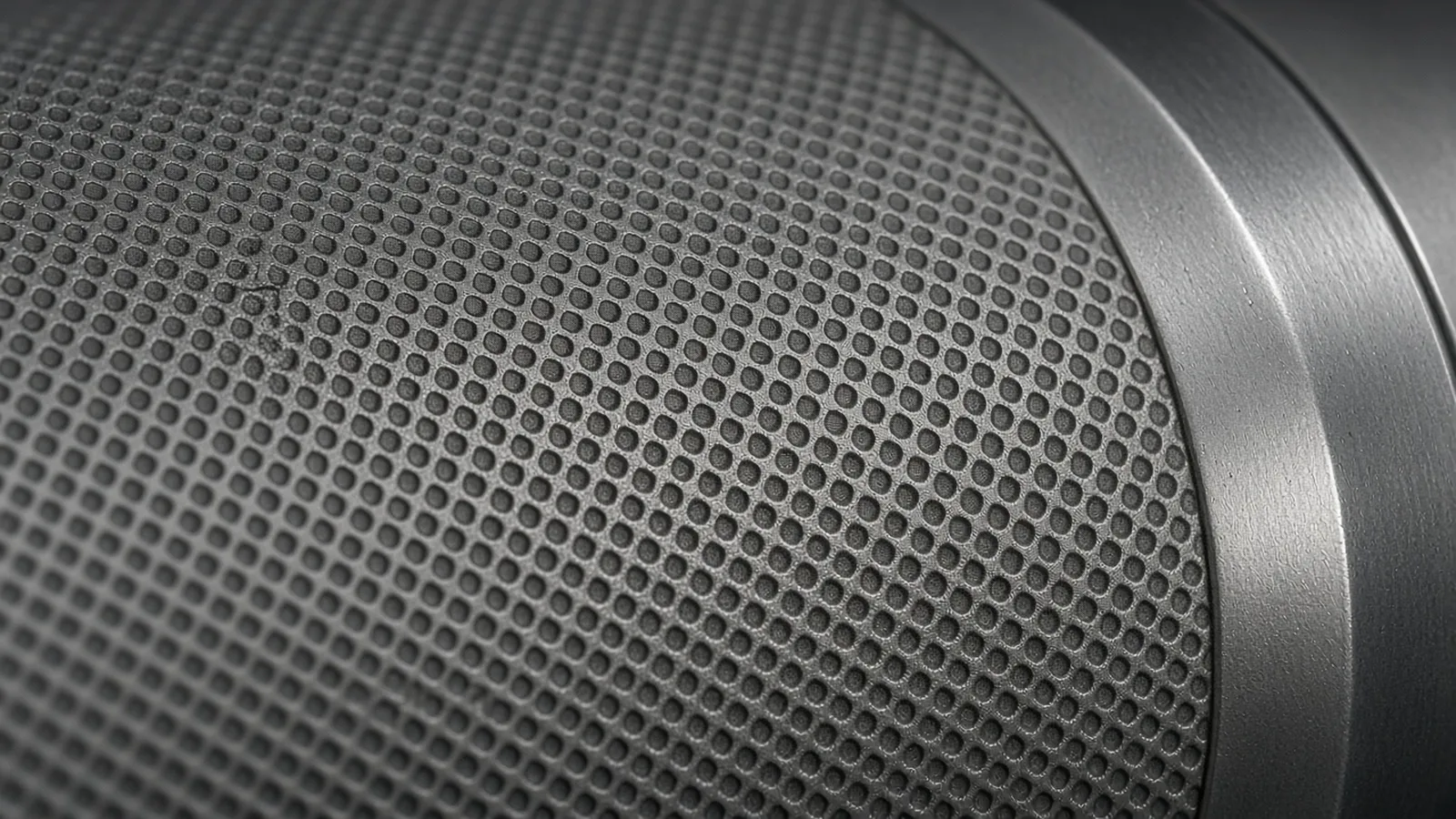
Flexo, as Tension Envelope describes it for envelopes, uses a rubber or photopolymer plate, a hard cylinder with a ceramic engraved surface, and fast-drying water-based ink. The fountain roller picks ink up. The anilox holds a set volume and lets the rest fall back. The plate takes ink only on its raised surface and stamps the paper on the impression cylinder. A doctor blade, where the press has one, wipes the anilox so the cells, not a puddle, set the film.
Offset, in David Argent’s account for PFFC, starts from the opposite plate. Image areas take ink. Non-image areas take dampening solution. The image moves to a rubber blanket and only then to paper, which is why the process is called offset. The plate is essentially flat. The ink is high-viscosity and highly pigmented because the film is split several times in the roller train.
Argent counts the flexo splits as two: anilox to plate, and plate to substrate. He counts the offset splits as many, and he says the ink that reaches the substrate in either process is a film of 1–5 microns. Harper’s scale for the same class of small length is a hair at about 70 microns. Dividing those two published figures, 70 / 5 = 14, so the thick end of Argent’s film is one-fourteenth of the hair Harper uses as a ruler. That ratio is arithmetic on the two citations. It is not a measured film from an envelope press.
The relief plate is an advantage on rough paper and a drawback on dots. Impression squashes the raised dot, and Argent names that image growth as the flexo defect. Harper’s reason for a thin film is the same defect from the ink side: less ink leaves the dot, so gain drops. Excess volume makes that control harder.

The volume that is allowed to change
Harper calls anilox volume the primary control in flexo and measures it in BCM, billions of cubic microns per square inch. The outline Harper publishes, and the suggested-use table in FFTA’s Principles and Practices additional resources, use the same four bands:
| Application | Line screen | Volume |
|---|---|---|
| Heavy lines and solids | 180–330 | 9–4 BCM |
| Line and type | 200–400 | 8–3 BCM |
| Vignettes | 360–500 | 3.6–2.8 BCM |
| Process | 500–1200 | 2.8–0.9 BCM |
The process ceiling is 2.8 BCM. The heavy-solids end of the same table is 9 BCM. The ratio of those two published edges is:
9 / 2.8 = 3.2
A roll at the heavy end of the solids band carries 3.2 times the ink volume of a roll at the top of the process band. The light end of the solids band is 4 BCM, and 4 / 2.8 = 1.4, so even that lighter solids roll sits 1.4 times above the process ceiling. One engraved roller cannot sit inside both bands. The table is the rule: if the art is process color and the volume is above 2.8 BCM, change the roll or change the art. Pulling impression back does not move a 9 BCM engraving into the 2.8 BCM band.
Harper’s depth example is the matching constraint on line screen. A volume of 3.2 BCM wants a line screen of about 500. The same 3.2 BCM cut at 1000 lines is too deep. Cut at 120 lines it is too shallow. Line screen and volume are one specification, not two knobs.
Inside the process band the high and low edges are 2.8 and 0.9 BCM. 2.8 / 0.9 = 3.1, so the band itself already spans a threefold volume change. A banded roll, which Harper describes as real bands of line screen and volume on one roller, is how a shop finds the thin film that still hits density. The page does not replace that test.
Where the envelope is when the ink hits it
Tension’s envelope account says most envelopes are printed flexo during manufacturing, on a web-fed machine, and treats that route as the simpler of the two processes it is comparing. The configurations it names are concrete. Stacked units put two or three colors in a vertical stack, one color each. Inline stations sit in a row along the web. Central impression, which Tension also calls enhanced flexo, is the four-color process arrangement: one central impression cylinder, four ceramic anilox rollers, four ink reservoirs, and digital plates on calendered paper. A narrow-web inline press is the option Tension cites for UV ink or foil.
That is a job split, not a slogan. A one- or two-color transactional envelope is the job Tension calls the usual flexo case. A mailer whose art is four-color process is the job it moves to the four-anilox central impression, or off flexo entirely.
Film and paperboard use a different comparison, flexographic versus offset printing for packaging. The converting sequence already separates the same choice by station. Printing can happen inline, with flexo units on the envelope machine, or beforehand, by offset or digital, on the roll or the blanks. Window film and seal gum come later. A pre-print has to survive scoring, folding, and any heat used to dry the flap gum. An inline flexo unit prints paper that is about to be cut and gummed, so the ink has to dry on a moving web before the next station. Neither fact is a quote for a run length. No crossover quantity, in pieces, appears in the sources read for this page.
What the leftover ink costs
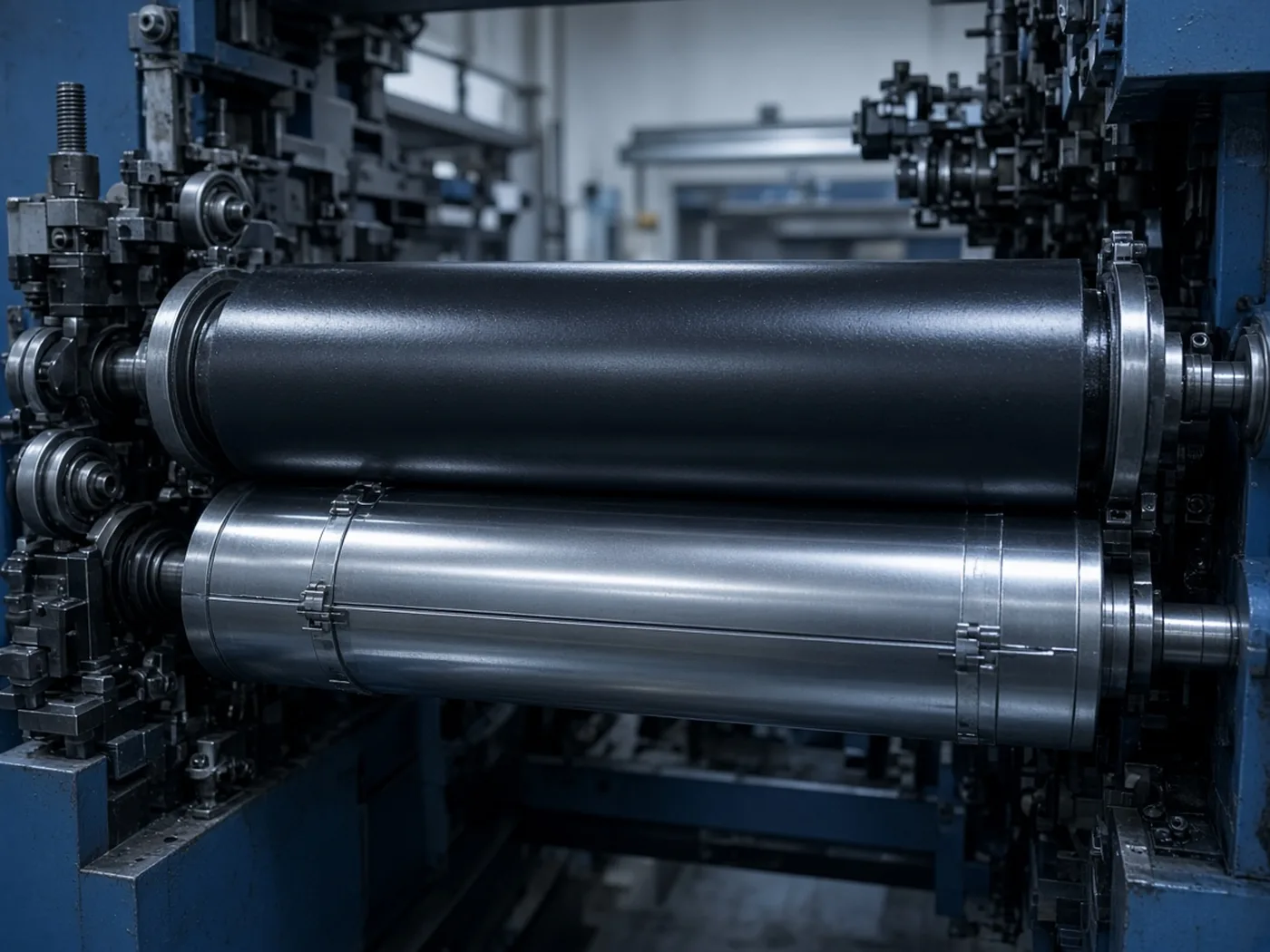
Argent’s practical difference is the ink that comes off the press. Flexo return ink can usually go back, with little adjustment, because the two splits have not mixed it with a dampening solution. Offset ink left in the unit is scrap: dampening solution and paper fibers have contaminated it. During the run, offset transfer also moves when dampening chemistry changes, when the ink takes up water, and when the many film splits drift. Someone has to adjust. Flexo’s matching drift is impression growth of the relief dot, plus any anilox that was engraved for a heavier band than the art.
A cost comparison that prices only the plate and the makeready misses that scrap ink. It also misses a roll that sits inside the solids band and outside the process band. The check before a custom envelope is released to either process is short:
- Name the graphic as solids, line and type, vignette, or process, using the four rows above.
- Read the anilox line screen and BCM. If the row and the roll disagree, stop.
volume / 2.8greater than 1 means a process job is over the ceiling. - If the route is offset, plan the leftover ink as scrap, and plan the print on the roll or the blanks before the window and the gum.
- If the route is inline flexo, match the station count to the color count: stacked or inline for the one- and two-color work Tension describes, four anilox rollers when the art is the central-impression case.
The types of mailing envelopes still decide the blank, the window, and the flap. This page only decides which ink path is allowed to hit that blank.
How this page was checked
Harper’s anilox note, saved 20 October 2026, supplies the BCM definition, the four application bands, the 3.2 BCM line-screen example, and the 70-micron hair. The FFTA additional-resources PDF supplies the same four bands in its suggested-use table. Tension’s flexography note supplies the envelope ink path, the web-fed converting route, and the stacked, inline, and four-anilox central-impression layouts. Argent’s PFFC note supplies the offset water-and-blanket path, the two flexo film splits, the 1–5 micron film, and the leftover-ink difference. The ratios 9 / 2.8, 4 / 2.8, 2.8 / 0.9, and 70 / 5 are arithmetic on those published edges. No envelope was printed for this page.
Frequently Asked Questions
What is the difference between flexo and offset on an envelope?
Flexo meters low-viscosity ink with an engraved anilox onto a relief plate and stamps that plate onto the paper. Offset wets a flat plate, inks only the image, and transfers the image to a rubber blanket before the paper. The envelope can take either path; the metering device is what changes.
Which anilox volume is for process color?
Harper's published outline, matched by the FFTA anilox table, puts process work at 500–1200 lines per inch and 2.8–0.9 BCM. Heavy lines and solids sit at 180–330 lines per inch and 9–4 BCM. A volume above 2.8 BCM is outside the process band in that table.
Why is leftover offset ink hard to reuse?
David Argent's ink-film note says offset ink left in the press is contaminated by dampening solution and paper fibers, so it is not usable after the run. The same note says flexo return ink can usually go back on the press with little adjustment.
When is flexo the envelope process?
Tension Envelope describes flexo as the usual method, done on a web-fed converting machine, and calls one- and two-color transactional work the common flexo job. Four-color process, in that account, moves to a central-impression arrangement with four anilox rollers. Offset remains the pre-print route on rolls or blanks.
Sources
- Understanding Anilox Volume (Harper Corporation of America)
- Flexography: Principles and Practices 6.0, Additional Resources (anilox cell volumes) (Flexographic Technical Association)
- Print Basics: Flexography, The Most Common Method for Envelope Printing (Tension Envelope)
- Managing the Ink Films (Paper, Film & Foil Converter)